

Holy Spirit-Led Coaching Tools
A client says, “I’m broken,” and the coach responds, “I understand. We all are broken.”
That may sound compassionate, and the coach probably means it that way. But I wonder if we sometimes agree with clients too quickly because we want them to know we hear them.
As Holy Spirit-led Christian coaches, we have to be careful here. Compassion is not the same as agreement with every conclusion a client draws about themselves. We are called to listen deeply, but also to discern truth.
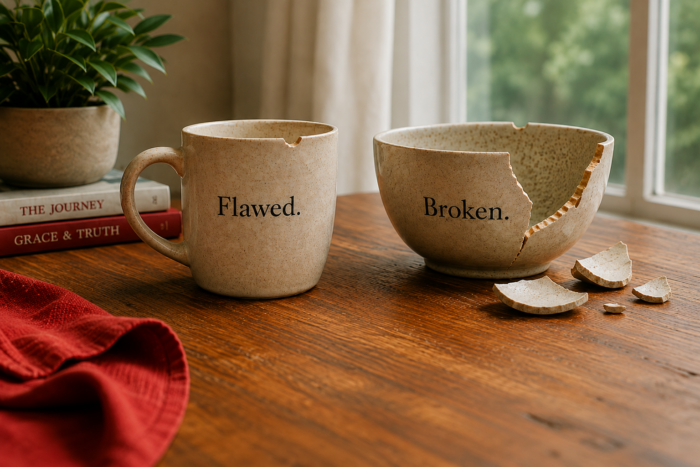
I’ve been thinking about this lately because of the way we use words like broken and flawed to describe ourselves. In a coaching session, those words can tell us quite a bit about how a client sees themselves. I don’t want to rush past them, but I also don’t want to automatically affirm them as identity statements.
Is validating an experience the same as validating a conclusion?
| No. You can acknowledge what someone has experienced without agreeing with the conclusion they’ve drawn from it. |
There is a difference between validating what someone has experienced and validating the conclusion they have drawn from the experience. If a client tells me their spouse betrayed them and says, “I’m broken now,” I can acknowledge the betrayal. I can recognize that their trust has been deeply wounded and that they may be questioning things they once felt secure about. I can give them room to grieve and process without agreeing that broken is now who they are.
This is where Scripture gives us grounding.
| Psalm 34:18 (ESV): “The Lord is near to the brokenhearted and saves the crushed in spirit.” |
God acknowledges brokenness, but He does not define the person by it. He draws near to heal it. That distinction is important for Christian coaches. Brokenness is more of a condition, not someone’s identity.
Sometimes we are so focused on creating a safe place for clients to talk that we forget listening well doesn’t require agreeing with everything we hear. A client can be completely honest about how they see themselves and still be mistaken about what they have concluded.
Think about some of the statements we hear: “I’m a failure.” “I always mess things up.” “Nobody wants me.” “I’m just not good enough.” “I’m broken.” Those statements may come from something very real. The client may have failed at something that mattered deeply, experienced rejection more than once, or made decisions that carried painful consequences. I don’t want to minimize any of that. But I also don’t want to hear “I’m a failure” and respond as though failure has become their identity. That’s where we have to listen with both compassion and discernment.
What should you ask when a client says “I’m broken”?
| Ask what the word means to them. Understand what they’ve placed underneath it before you respond to it. |
If a client says, “I’m broken,” I might ask, “What does broken mean to you?” I want to understand what they have placed underneath that word. Maybe they mean they don’t trust people anymore. Maybe they have repeated a pattern they regret and feel stuck. Something could have happened years ago that they have never fully processed. They could simply be using broken because they don’t yet have language for their pain. Once I understand what they mean, we have something more specific to work with.
What’s the difference between being flawed and being broken?
| A flaw is a behavior or pattern that can change. Coaching addresses the flaw without declaring the whole person defective. |
This is where the difference between being flawed and being broken can become useful in a coaching conversation. We all have flaws. A client may have behaviors that need to change or thought patterns that need to be renewed. There may be areas where they need to take responsibility, and sometimes the client truly did handle a situation poorly.
Good coaching, and especially Holy Spirit-led coaching, does not require us to erase accountability in the name of comfort. If the client was wrong, we can help them see it clearly. If they need to apologize, we can support them in taking that step. If they keep responding in ways that are producing pain in their life, we can help them recognize the pattern and invite the Holy Spirit into the transformation process.
What we must avoid is moving from identifying behavior that needs change to declaring that the whole person is defective. That is not how God speaks over His children.
| Romans 8:1 (ESV): “There is therefore now no condemnation for those who are in Christ Jesus.” |
Conviction leads to clarity and change. Condemnation can distort the way a person sees themselves, and as coaches, we need to know the difference.
Should you answer a negative belief with a Bible verse right away?
| Not too quickly. Understand the belief first, then let Scripture gently renew the mind rather than override the pain. |
I also think Christian coaches have another responsibility here because we are not only listening for what the client believes. We are listening for whether what they believe aligns with what God says is true. That does not mean every time a client says something negative about themselves we immediately rush to correct it with a Bible verse. Sometimes we do that too quickly.
A client says, “I feel worthless,” and before they have even fully expressed their story, the coach responds, “But you are fearfully and wonderfully made.” The Scripture is true. Psalm 139:14 says exactly that. But did we hear the client? I’m willing to go out on a limb to say they already know and often quote the verse.
| Psalm 139:14 (ESV): “I praise you, for I am fearfully and wonderfully made.” |
I want to know what led them to feel worthless and when that belief began. What experiences reinforced it? Have they been carrying it for years without challenging it? What do they believe “worthless” says about their identity now? I want to understand the belief before I try to replace it.
Then, when Scripture is brought into the conversation, it is not used as a quick override, but as truth that gently renews the mind. We are not placing a verse on top of pain we have not taken time to understand. We are inviting the Holy Spirit to bring light into what has been hidden or distorted. That is a very different conversation.
Is “broken” an unbiblical word for a client to use?
| No. Scripture itself uses the word. Broken can describe an experience without becoming an identity. |
The Bible itself uses the word broken. Scripture speaks of the brokenhearted and of a broken and contrite heart God does not despise. So I would never tell a client that broken is automatically an unbiblical word. I would pay close attention to how they are using it because broken can describe an experience without having to become an identity.
The same is true of flawed. If a client recognizes a flaw in themselves, that can actually give us something to address. The Holy Spirit may bring something to their awareness that needs correction or change. But I would not want flawed to become the final word they speak over their life either.
This is why language matters in coaching. Words often reveal beliefs long before a client is aware of them, and sometimes one sentence gives us the place where Holy Spirit-led work can begin.
So the next time a client says, “I’m broken,” you don’t necessarily have to correct them, and you certainly don’t have to agree with them. Ask what they mean and listen for the story underneath the statement. Pay attention to the conclusion they have drawn, and then help them examine whether that conclusion aligns with the truth about their experience and ultimately with what God says about them.
We can acknowledge what has hurt a client without agreeing that the hurt gets to define who they are. I think that is an important distinction for every Christian coach to understand.
Dr. Nanette Floyd Patterson, CPsy.D., LCMHC
Master HIScoach™
|
Ready to Coach the Whole Person? HIScoach Training Academy equips Holy Spirit-led coaches to listen with both compassion and discernment, and to lead clients toward the truth God speaks over them. |
Scripture quotations are from the ESV® Bible (The Holy Bible, English Standard Version®), copyright © 2001 by Crossway, a publishing ministry of Good News Publishers. Used by permission. All rights reserved.
|
Want more Holy Spirit-led session tools like this? Join our SKOOL community or visit www.HIScoachTrainingAcademy.com |