

How Holy Spirit-led coaches can go deeper, faster with one powerful assessment tool
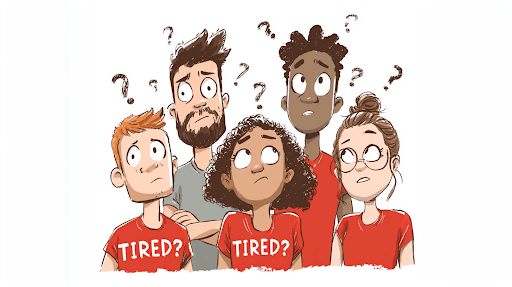
She sat across from you, physically present, spiritually willing, and completely exhausted. She said the words you’ve heard before: “I’m just tired.” And you nodded, because you understood. But here’s what most coaches never stop to ask: tired of what, exactly?
Because not all tiredness is the same.
The woman who is mentally tired needs something completely different than the woman who is spiritually dry. The client carrying everyone else’s emotions is not struggling with the same depletion as the one whose body has been running on caffeine and willpower for six months straight.
If you are a Holy Spirit-led Christian coach, this distinction is not just helpful — it is essential. Because when you can accurately identify the kind of tired your client is carrying, you stop offering generic advice and start offering targeted, Spirit-guided transformation.
The most effective coaches don’t just ask “How are you feeling?” — they ask “Where are you depleted?”
Why “I’m Tired” Is Never the Whole Story
Fatigue has become the background noise of modern life — especially for Christian women who are building businesses, raising families, serving their churches, and trying to show up fully for everyone around them. But tiredness is not one-size-fits-all, and treating it that way is one of the most common coaching gaps in practice today.
As a Christian coach, you have been called to serve the whole person — mind, body, emotions, and spirit. That calling requires tools that reflect that wholeness. A client who scores high on emotional depletion does not need the same next steps as one whose primary struggle is spiritual dryness. When we lump all tiredness together, we miss the root — and when we miss the root, we only treat the symptoms.
“For everything there is a season, and a time for every matter under heaven.” — Ecclesiastes 3:1
God did not design your clients to be in a constant state of output. He built rhythm into creation. He modeled rest. He commanded Sabbath. And He sent Jesus, who regularly withdrew from ministry to pray, rest, and be renewed, as the ultimate example of sustainable, Spirit-led living.
Your coaching practice can become the place where your clients finally get the language for what they are experiencing… and a biblical, practical path forward.
The 4 Types of Tiredness Every Christian Coach Needs to Know
What are the 4 types of tiredness in Christian coaching? Mental, Emotional, Physical, and Spiritual tiredness — each affecting a person differently and requiring a distinct path to restoration. Here is what each one looks like in your coaching sessions:
Mental Tiredness
Mental tiredness is what happens when your mind never fully powers down. Your client is not just busy. She is overwhelmed by the sheer volume of thoughts, decisions, and information she is managing every single day. She may struggle to concentrate during your sessions, forget things she normally would not, or find herself making simple decisions feel impossibly hard. She replays conversations, worries about things she cannot control, and collapses into bed at night only to find her mind is still running. She is not lazy. She is not unfocused. She is mentally maxed out, and she needs a path to mental rest, not more to-do lists.
She might say: “I know what I need to do — I just can’t seem to think clearly enough to do it.”
Emotional Tiredness
Emotional tiredness runs deep and is often the hardest for your client to name. She has been the strong one, the caregiver, the one everyone calls when things fall apart. She has poured herself into relationships, ministry, family, and work — giving her emotional energy freely and consistently — until the well ran dry. She may feel resentful without understanding why, cry unexpectedly, or find herself going through the motions of caring while feeling numb inside. She struggles to set limits on her time and energy because she genuinely loves the people in her life. But love without replenishment becomes depletion, and depletion left unaddressed becomes burnout.
She might say: “I feel like everyone needs something from me and I have nothing left to give.”
Physical Tiredness
Physical tiredness is the exhaustion that lives in the body, and your client has likely been ignoring its signals for far too long. She wakes up tired. She pushes through the afternoon on caffeine and willpower. She skips meals, skips sleep, skips rest because there is always something more urgent demanding her attention. Her body has been storing stress in her shoulders, her jaw, her lower back… and she has learned to tune it out. She may not even remember what it felt like to have real, sustained energy. Physical depletion is not just about sleep. It is about a body that has been treated as a machine instead of a temple. It is asking, quietly but persistently, to be honored.
She might say: “I wake up tired. I go to bed tired. I don’t even remember what it felt like to have energy.”
Spiritual Tiredness
Spiritual tiredness is perhaps the most tender of the four because it often carries with it a quiet shame. Your client is still showing up. She is still attending church, still serving, still doing the things a faithful woman does (or man). But something has gone flat. Prayer feels like talking to a ceiling. Scripture feels dry. The joy and hunger that once marked her faith have been replaced by a going-through-the-motions weariness that she is almost afraid to admit out loud. She has not walked away from God but she feels far from Him. Spiritual tiredness is not a faith failure. It is a signal that the soul needs tending, that the deep places have been neglected, and that what she needs most is not more religious activity but a genuine, unhurried encounter with the living God.
She might say: “I’m doing all the things I’m supposed to do. But I don’t feel God anymore.”
When you can name the type of tiredness your client is experiencing, you shift the entire coaching dynamic. You move from reaction to precision and from symptom management to root-level transformation. And because this framework is built on a whole-person, Biblical understanding of being human, it aligns perfectly with the Holy Spirit-led approach you are already committed to.
Why the Holy Spirit-Led Coach Is Uniquely Positioned for This Work
Secular coaching tools can address mental and physical depletion fairly well. What they often fail to do is touch the spiritual dimension. The part of your client that is longing for genuine encounter with God, not just a better morning routine.
This is your lane. This is your calling. And this is where Spirit-led assessment tools become not just a coaching resource but a Kingdom resource.
“He gives strength to the weary and increases the power of the weak.”— Isaiah 40:29
When your clients can finally name the kind of tired they are, when they see it on paper, scored and ranked, something shifts. They feel seen. They feel understood. And they become far more open to the next steps God has for them, because the path forward is suddenly clear.
The Gap Most Coaches Don’t Know They Have
Here is a question worth sitting with…
When a client says, “I’m exhausted,” what actually happens next in your session?
Most coaches lean into conversation. You ask a few follow-up questions. You listen well. You reflect. You may even sense what’s going on spiritually.
And that matters.
But here is where many coaches unintentionally stop short.
Conversation alone can only take you so far.
Because without clarity, even a meaningful session can remain broad instead of becoming precise. You may feel like you are helping, but you are still working around the issue instead of going straight to it.
That is the gap.
A gap in structure that supports what the Holy Spirit is already revealing.
Holy Spirit-led coaching begins with discernment. The Holy Spirit is the source of insight. Tools simply help bring clarity and direction to what He reveals. When that insight is supported with wisdom and the right structure, what was once difficult to name becomes clear and actionable.
This is where your coaching shifts.
You are no longer trying to figure things out in real time. You are stepping into the session with direction.
You are not guessing whether your client is emotionally depleted or spiritually dry. You are no longer circling the issue, hoping it surfaces.
You can see it.
And when your client can see it too, everything begins to change.
Using Coaching Assessment Tools to Identify Client Depletion
A strong assessment tool does what conversation alone cannot.
It moves your session from general insight to clear direction, helping both you and your client see what has been felt but not fully understood.
It begins to bring things into focus. Here’s what that looks like in practice:
- It gives language to what your client has been feeling but could not name
- It reveals where depletion is actually happening, not just where it appears to be
- It allows you to focus your session with intention instead of assumption
- It strengthens your credibility as a coach who brings both Spirit and structure
- It keeps your work grounded in truth, not just emotion
The coaches who go the deepest with their clients are the ones who invest in tools that go the deepest with them.
There is a way to support what the Holy Spirit is already revealing with clarity and structure.
The What Type of Tired Are You? assessment was designed for Holy Spirit-led coaches who want to go deeper with their clients without adding more pressure to their process.
It gives your clients language. It gives you direction. And it helps your sessions move with purpose.
Click here to get the Assessment
You were called for such a time as this. Lead them well.